Have you ever stopped to wonder if the world you perceive is the same one everyone else experiences? A viral TikTok video explores this very idea, suggesting that from a neuroscience perspective, your brain creates your reality more literally than you might think. This fascinating concept challenges our understanding of the world and our place within it, turning a simple philosophical riddle into a profound scientific inquiry.
The Old Riddle with a New Answer
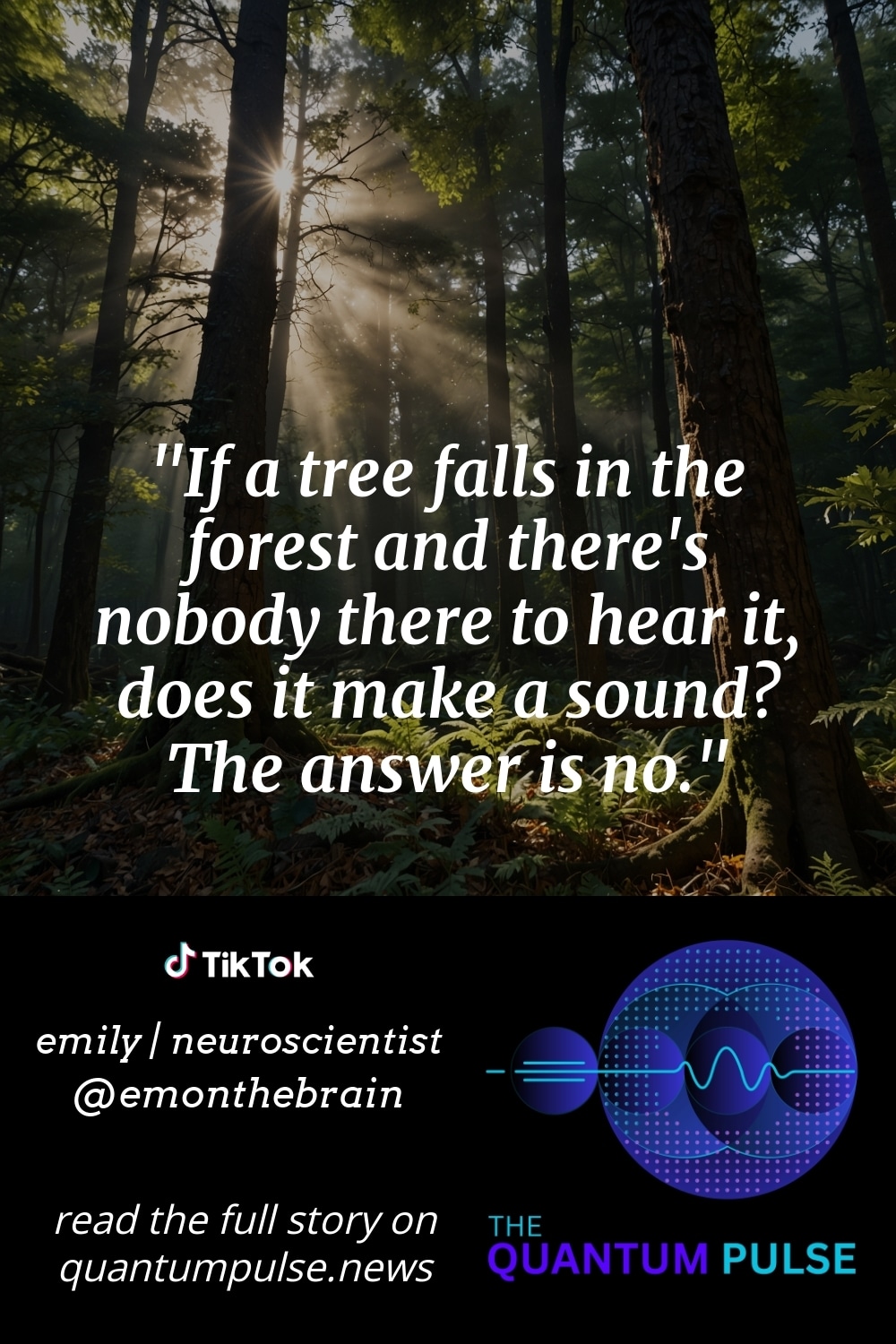
We’ve all heard the classic philosophical question, “If a tree falls in a forest and no one is around to hear it, does it make a sound?” It’s a puzzle designed to make us think about observation and reality. In a TikTok video that has sparked conversation with over 1.2 million views, a creator named emily | neuroscientist 🧠, who goes by @emonthebrain, offers a direct and surprising answer from the field of neuroscience.
“If a tree falls in the forest and there’s nobody there to hear it, does it make a sound? The answer is no.”
According to @emonthebrain, this isn’t just a philosophical stance but a scientific one. The video explains that the phenomenon we call “sound” is not an external event but an internal creation of the brain. The falling tree certainly creates something, but it’s not what we perceive as sound until a brain gets involved.
How Your Brain Creates Your Reality from Vibrations
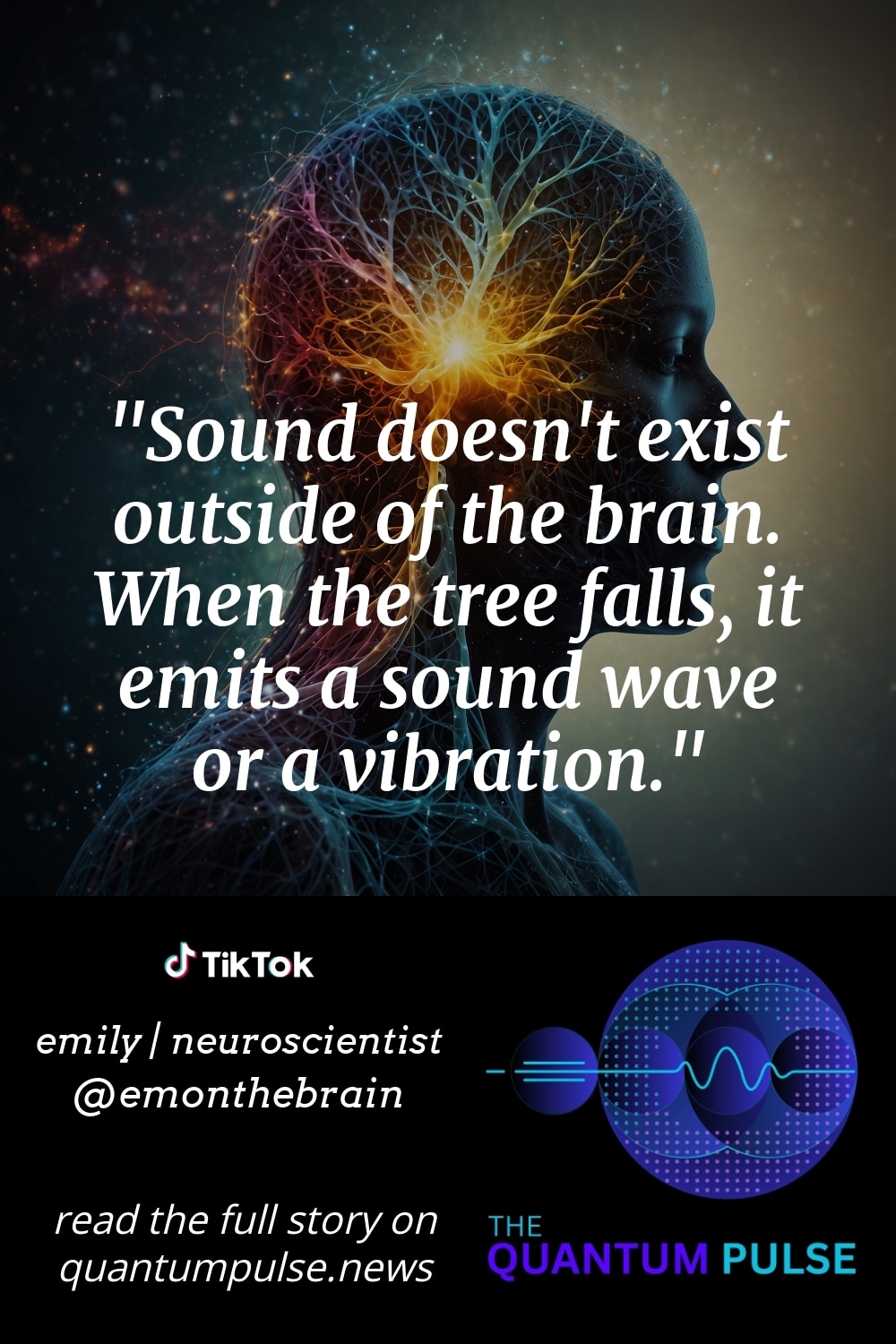
So, if the falling tree doesn’t make a sound, what exactly happens? The video breaks down the process. The physical event of the tree hitting the ground generates energy that travels through the air as vibrations or waves. These are just waves of pressure, not the auditory experience of a “crash” or “thud” we are familiar with.
“Sound doesn’t exist outside of the brain. When the tree falls, it emits a sound wave or a vibration.”
As @emonthebrain clarifies, these vibrations only become “sound” when they reach a receiver, like an ear, which then sends signals to the brain. It is the brain’s job to interpret these signals and construct the subjective experience of hearing. This means that sound, as we know it, is a purely neurological event. It’s a translation, not a direct reception.
Watch the original video by @emonthebrain below:
Your Unique Brain, Your Unique World
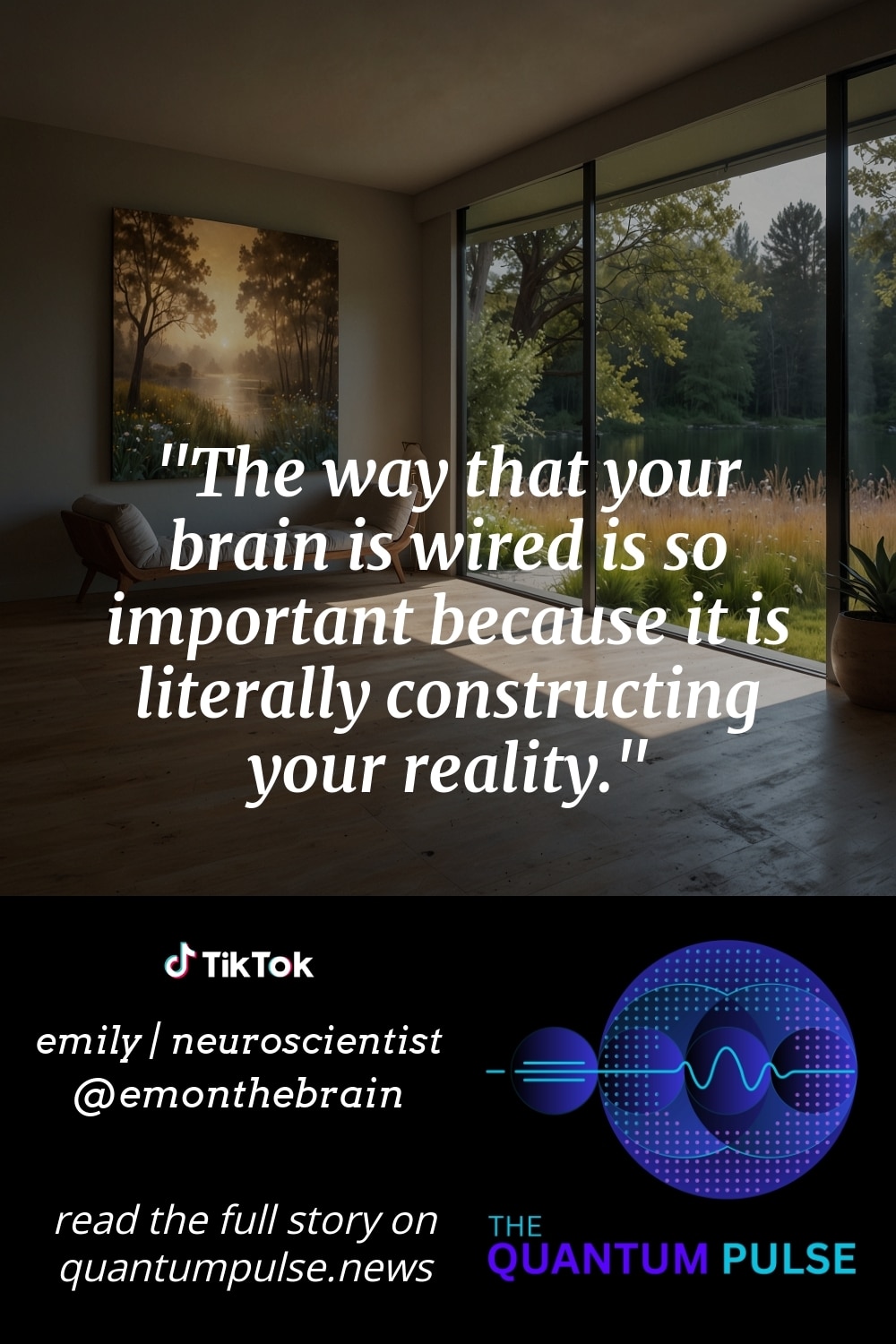
This idea has even deeper implications. If our brains are responsible for constructing sound, it follows that no two brains will construct it in exactly the same way. The creator points out that our individual brain wiring dictates our perception, which explains why musical tastes can be so personal and diverse. What one person hears as a beautiful melody, another might perceive as noise.
“The way that your brain is wired is so important because it is literally constructing your reality.”
This perspective invites us to look at our entire sensory world with fresh eyes. If sound is a construction, what about color, taste, or touch? Are we all living in slightly different, personalized realities shaped by our unique neural pathways? It’s a powerful reminder that our perception is not a passive window onto an objective world, but an active, creative process.
What Does This Mean for You?
The information shared by @emonthebrain is a fantastic launchpad for curiosity. It bridges a gap between neuroscience and spiritual concepts of reality creation. We encourage you to question everything. Does this idea resonate with you? How does it change the way you think about disagreements or differences in opinion? If every brain builds its own reality, it makes empathy and understanding even more vital. What are your thoughts? Feel the pulse of this perspective and decide for yourself what it means to you.